I am reading “Hold the Duck Fat” blogs with my mother, Andrée. We have just finished ‘all the plums’ and were about to start ‘soup potatoes’, when Andrée sagely announces that before the soup potatoes were the wild artichokes. And perhaps even the wild asparagus.
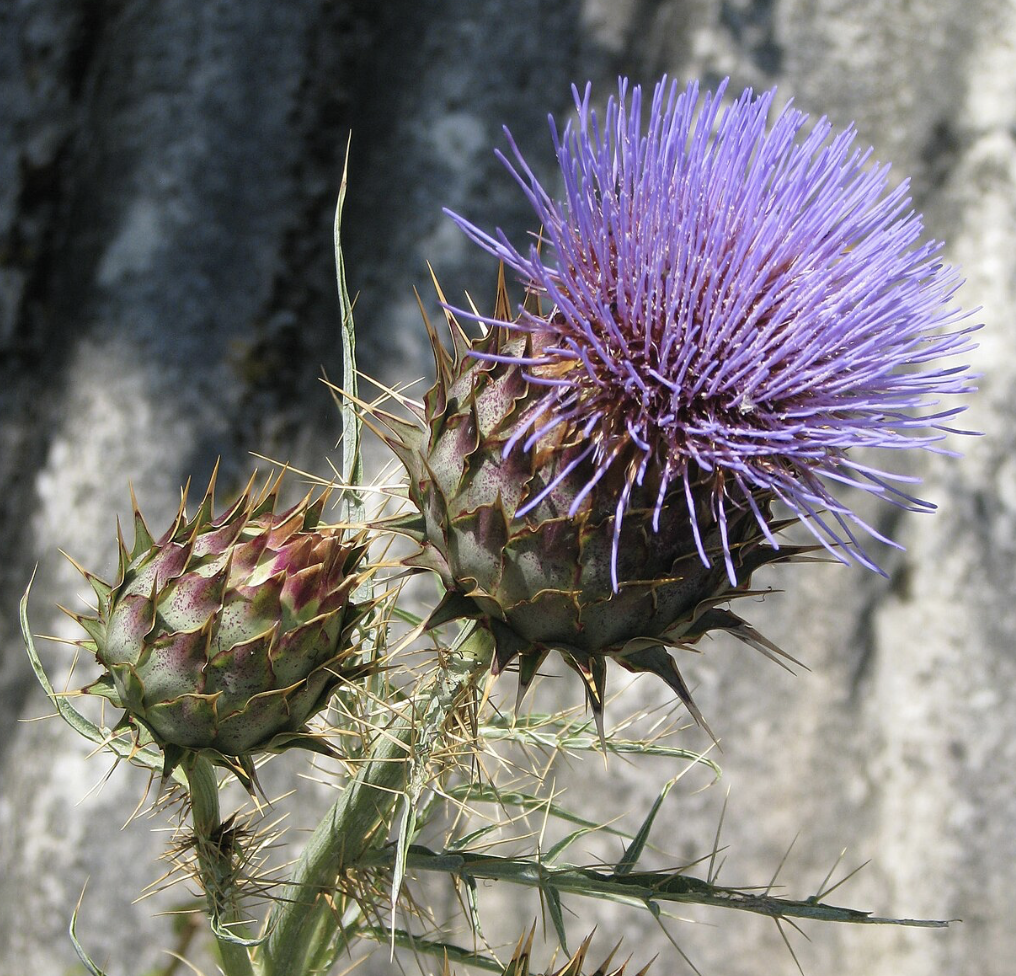
How this fits, chronologically or logically, I do not know. But perhaps an expression of what her topics might be, were she to have her own blog. Or she might have been referencing the fact that wild artichokes have a long history and some consider them better than their cultivated offspring — the farmers at Favella.it agree with her. You can read that history in the Wikipedia entry on wild artichokes, also known as Cardoon(Cynara cardunculus), where the uncropped featured image came from.
For me, this brings up the ‘gleaning’ aspect of foraging. The stuff you can find in nature if you know exactly where and when to look, and the joy of getting it right. There is a certain magic in the mushrooms, appearing when they want, or not at all some seasons. Secretly, I suspected the old paysans of the area of liking these wild versions so much, only because they didn’t have to break their backs growing them.
I can confirm that what they call the wild garlic (which looks and tastes like leeks) have more flavour, as this corresponded to my weeding compulsion one year. But they are harder to clean (having handfuls of small bulbs to catch the dirt). I’ve never had the respounsa, or wild asparagus. Those that love them, get a wild gleam in their eye (including Bernard), others just say it’s easier to buy asparagus. I am reliably informed that “respounchous” or “respounsous” are not wild asparagus but Tamus communis (previously Dioscorea communis), commonly called Black Bryony or Black bindweed. But the variety of mushroom, and deliciousness, to this I can attest.
Bernard, Andrée’s brother Guy’s friend of the alternative plateau, was a master forager. He said it was an essential part of their eating well when he was young. Certainly, our friend Francine, who is woven into the fabric of our countryside, reports nightmares of black radishes being the only vegetable they had access to in the winter, and her joy at the spring. I forget what else he waxed lyrical about, but remember Mr Malfettes (who I might write about if I am invited back), pointing out herbs and saying they were good for tisane. I thought he was kidding. This was the guy who tried to get me to pee on an electrified fence. But when I went back to find the marjolaine/marjoram and tried later, it did actually make a nice tisane! He probably only wanted me to make the tea so that he could get another chance to have me pee on an electrified wire. I was maybe 10 at the time.
Oregano (Origanum Vulgare), also known as Wild Marjoram
There are a whole lot of plants out here, more of which tea can be made from. The rosemary grows wild. The genévrier (juniper) was once more bountiful, to flavour the gin. And people knew which ones were edible, and when. I remember Mom showing the daughter of friends the fresh shoots of some kind of vine to eat. Introduced to such delights, she then started tasting random leaves along the path, to her patent disgust and our great amusement. She was probably 10 at the time.
People’s gardens now contain edible flowers and all kinds of exotic stuff from the kiwi to all other corners of the planet. I have still not seen theJardin des Paradis in Cordes, but presume there to be international inspiration in addition to the local preservation.
At the end of the summer, were the blackberries along the sides of the paths. I think we were the only ones picking them, either because the locals considered them weeds and a pain to harvest, or because by the end of the summer they had lost out in allure against all the other fruit. But we made jam out of them, and people seemed to appreciate the gift.
Either hard to find, or available only very shortly, or both (mushrooms), the rarity, contributes to their allure. This is France, after all, where an ingredient worth having is worth searching for. Where they had to protect the lowly garden snail, because they were in danger of disappearing from foragers. Whenever I see an abundance of something, I know it is not edible.
No generative AI has been knowingly used in the writing of this blog (in spite of WordPress’s insistent offers). The images were cropped, but I do not use filters or after image editing—just what my beloved iPhone 13 mini captures. The exception is the watercolor images, which were made from my photographs by an early version of the Waterlogue app on my iPad.


.jpg)